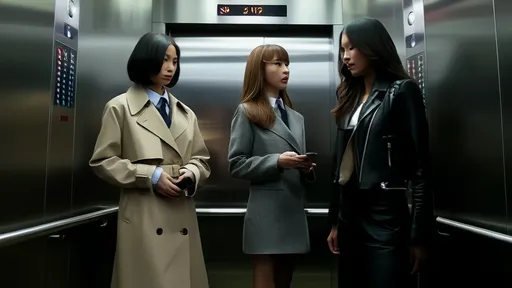
The modern urban experience has birthed countless unspoken social contracts, but few are as universally perplexing as the elevator gaze dilemma. In the confined metal boxes that transport us vertically through concrete jungles, humans have developed intricate nonverbal communication systems to navigate the discomfort of proximity with strangers. This peculiar phenomenon of elevator eye etiquette reveals much about our primal instincts, cultural conditioning, and the psychological impact of artificial environments on human interaction.
Elevators create what anthropologists call "forced proximity situations" - environments where social norms collapse under spatial constraints. The average elevator ride lasts approximately thirty seconds, yet these brief encounters can feel interminable when eye contact protocols are breached. Most urban dwellers instinctively understand the unwritten rules: glance briefly upon entry to assess potential threats, then focus intently on floor numbers, smartphone screens, or suddenly fascinating shoes. This behavioral pattern stems from our evolutionary need to balance social awareness with personal space protection.
The science behind our elevator gaze aversion involves complex neurological processes. When strangers lock eyes in close quarters, the amygdala triggers mild stress responses - a holdover from prehistoric times when evaluating unfamiliar humans was crucial for survival. Contemporary neuroscience shows that mutual gaze activates the same brain regions involved in threat detection and social evaluation. This explains why maintaining eye contact with strangers in elevators feels distinctly different from doing so with acquaintances in open spaces.
Cultural differences in elevator eye behavior reveal fascinating societal variations. In collectivist cultures like Japan, commuters often maintain complete gaze avoidance as a form of mutual respect. Scandinavian countries exhibit similar patterns, reflecting cultural values around privacy. Contrast this with Mediterranean and Latin American cultures where brief eye contact and even smiles between strangers remain more socially acceptable. These differences occasionally cause discomfort for international travelers unaware of local elevator etiquette codes.
Architectural psychology plays an underappreciated role in shaping these interactions. Elevator designers have gradually implemented solutions to alleviate social tension - mirrors create the illusion of space, control panels give passengers purposeful hand movements, and digital displays provide focal points. Some cutting-edge elevator designs incorporate subtle lighting variations or curved walls to psychologically expand the perceived space. These features didn't emerge accidentally; they resulted from decades of research into human behavior in confined vertical transportation.
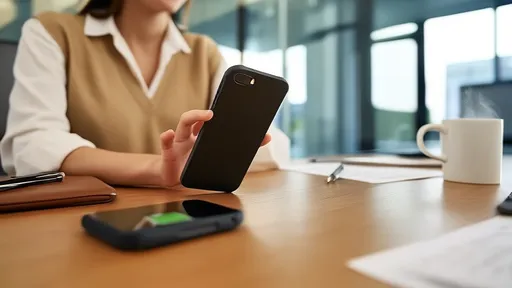
The smartphone era has dramatically altered elevator social dynamics. Mobile devices provide the perfect socially acceptable gaze target, effectively solving the "where to look" dilemma for many passengers. However, this digital refuge creates new social complexities. Is it ruder to stare at a stranger or ignore them completely for one's screen? Younger generations raised with smartphones show different elevator behaviors than digital immigrants, often maintaining device focus throughout the ride without experiencing the traditional discomfort.
Workplace elevators present unique social challenges. When professional hierarchies share confined spaces, gaze patterns become fraught with power dynamics. Junior employees often report uncertainty about whether to acknowledge executives, while managers describe discomfort in being both recognized and ignored simultaneously. Some corporate campuses have developed distinct elevator cultures where brief verbal greetings diffuse tension, while others maintain strict silence protocols that vary by floor - louder social zones near cafeterias versus library-like quiet near executive suites.
Psychologists note that elevator behavior serves as a microcosm of broader social anxiety. The inability to exit at will, the mirror effect of seeing oneself observed, and the lack of contextual cues all amplify normal social discomfort. Therapeutic techniques for social anxiety disorder often include controlled exposure to elevator situations precisely because they encapsulate so many common interpersonal fears in concentrated form. Mastering comfortable elevator presence frequently translates to improved general social confidence.
Future technologies may further transform these dynamics. Facial recognition systems could greet passengers by name, eliminating the anonymity that currently governs elevator interactions. Augmented reality glasses might allow passengers to see professional profiles floating above colleagues' heads, changing how we evaluate whether to engage. Some architects speculate that elevator designs will evolve into personalized pods, eliminating group rides altogether - a solution that would solve the gaze dilemma while potentially increasing urban isolation.
The pandemic's legacy continues to influence elevator etiquette. Respiratory concerns have made people more aware of shared air spaces, adding a health consciousness layer to existing social discomfort. Many now position themselves to minimize breathing directions toward others, creating new choreography of body angles that affects eye contact opportunities. Post-pandemic, some office buildings report more passengers willing to take stairs to avoid elevator interactions altogether.
At its core, the elevator gaze phenomenon represents humanity's ongoing adaptation to artificial environments. These metal boxes force prehistoric social circuitry to operate in contexts evolution never anticipated. Our solutions - from smartphone fixation to mirror staring - reveal both creativity and deep-seated biological programming. As urban density increases and elevator rides multiply, this peculiar social dance will continue evolving, offering sociologists a unique window into how humans negotiate privacy, politeness and proximity in the modern world.
By /Aug 6, 2025
By /Aug 6, 2025
By /Aug 6, 2025
By /Aug 6, 2025
By /Aug 6, 2025

By /Aug 6, 2025

By /Aug 6, 2025

By /Aug 6, 2025
By /Aug 6, 2025

By /Aug 6, 2025
By /Aug 6, 2025

By /Aug 6, 2025

By /Aug 6, 2025
By /Aug 6, 2025
By /Aug 6, 2025

By /Aug 6, 2025
By /Aug 6, 2025

By /Aug 6, 2025

By /Aug 6, 2025
By /Aug 6, 2025
