Protein Denaturation: 62°C Coagulation Curve of Onsen Eggs

Jul 24, 2025 By

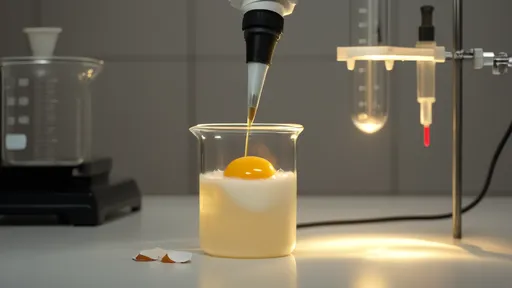
The delicate transformation of egg proteins under precise thermal conditions reveals fascinating insights into culinary science. Among all egg preparations, the onsen egg – with its luxuriously creamy yolk and just-set whites – stands as a testament to the artistry of temperature control. At 62°C, a magical threshold where albumen begins its graceful coagulation while yolk remains gloriously fluid, we witness protein denaturation at its most delicious.

Molecular ballet at 62°C unfolds as heat disrupts the intricate tertiary structures of egg proteins. Ovalbumin, constituting 54% of egg white proteins, begins unfolding its tightly coiled formations at this temperature. The exposed hydrophobic regions that normally hide within the molecular interior now seek new partnerships, creating a delicate network that manifests as the silky texture characteristic of perfect onsen eggs. This temperature represents the sweet spot where sufficient protein bonds form to create structure, while avoiding the rubbery toughness caused by excessive cross-linking at higher temperatures.

Thermal energy works differently on various egg proteins. Ovotransferrin, the most heat-sensitive major protein in egg whites, actually begins denaturing at just 61°C. Meanwhile, yolk proteins like livetins and phosvitin require slightly higher temperatures for substantial structural changes. The 62°C benchmark beautifully captures this transitional moment where white proteins have sufficiently coagulated while yolk components remain largely unaffected. Professional chefs have learned to exploit these differential denaturation temperatures to create textural contrasts within a single ingredient.

The time-temperature relationship proves equally crucial as the temperature itself. While 62°C marks the beginning of visible changes, maintaining this temperature for 45-60 minutes allows for gradual, even protein restructuring throughout the egg. This prolonged exposure enables heat to penetrate the entire egg uniformly, unlike the steep thermal gradients created by boiling water. The slow dance of molecules rearranging themselves creates that signature custard-like consistency that makes onsen eggs so distinctive.

Traditional Japanese hot springs provided the ideal environment for this cooking method long before modern immersion circulators. The naturally occurring geothermal waters maintaining consistent temperatures between 60-65°C created the perfect conditions for egg proteins to transform gently. Contemporary chefs have refined this approach using precision equipment, but the principle remains unchanged – respecting the delicate nature of protein denaturation.

Visual cues of perfect denaturation include the egg white achieving an appearance similar to fresh coconut flesh – opaque yet tender, with none of the rubberiness associated with boiling. The yolk undergoes its own transformation, thickening slightly while maintaining brilliant color and rich flow. These visual changes directly correlate with the microscopic realignment of proteins: ovalbumin molecules forming new bonds while still retaining considerable moisture between their structures.

The culinary implications extend far beyond traditional onsen eggs. Understanding 62°C coagulation allows chefs to create innovative textures in sauces, custards, and other egg-based preparations. Modernist cuisine has embraced these principles, using precise temperature control to reinvent classic dishes. From silky carbonara sauces to revolutionary dessert textures, the lessons learned from hot spring eggs continue influencing contemporary gastronomy.

Food scientists have mapped detailed denaturation curves showing how different egg proteins respond across the temperature spectrum. These studies reveal why straying just a few degrees from the 62°C ideal can dramatically alter results. At 64°C, yolk proteins begin substantial coagulation, while at 60°C, the whites may remain too loose. This narrow window of perfection explains why traditional methods relying on geothermal springs could achieve such consistent results – nature's thermostats rarely fluctuate beyond this range.

Home cooks can harness this science through simple techniques. A well-insulated cooler filled with water at precisely 62°C can substitute for professional equipment. The key lies in monitoring temperature stability, as even brief spikes can push yolk proteins past their denaturation points. Digital thermometers and patience become the home chef's most valuable tools when attempting this delicate balance between liquid and solid states.

The cultural significance of onsen eggs in Japanese cuisine reflects deeper philosophical connections between food and environment. Just as hot spring minerals interact with human skin, the thermal waters gently transform the eggs through prolonged exposure. This harmony between natural resources and culinary technique exemplifies how traditional foodways often align perfectly with underlying scientific principles, even when developed long before those principles were formally understood.

Nutritional aspects undergo subtle changes during this gentle cooking process. While some heat-sensitive nutrients like certain B vitamins experience minimal degradation at 62°C compared to boiling, the protein bioavailability actually improves through controlled denaturation. The unfolding of complex protein structures makes amino acids more accessible for digestion, while avoiding the nutrient losses associated with more aggressive cooking methods.

Experimental chefs continue pushing the boundaries of 62°C egg cookery. Some incorporate enzymatic treatments or pH adjustments to further modify texture, while others experiment with extended cooking times at slightly lower temperatures. These innovations all stem from that fundamental understanding of protein behavior at this critical thermal threshold. The humble onsen egg, far from being a static tradition, serves as a living laboratory for culinary exploration.

As cooking technology becomes more precise and accessible, the lessons of thermal egg cookery find new applications. From high-end restaurants to home kitchens, controlling protein denaturation through temperature mastery represents one of the most impactful intersections of science and culinary art. The 62°C onsen egg stands as both a delicious achievement and a reminder that sometimes, the most transformative processes require not force, but patience and precision.
Recommend Posts
Food

Caramelization Reaction: Temperature Alert for Sugar Color Brewing

By /Jul 24, 2025

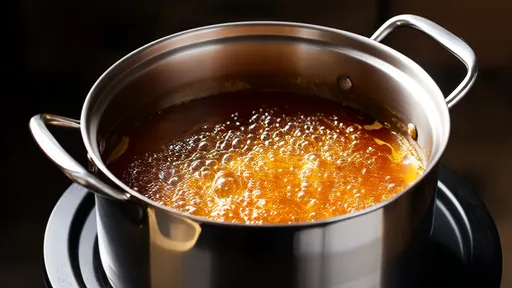
The art of caramelization is as much science as it is culinary craft. When sugar transforms under heat, it undergoes a complex series of chemical reactions that yield rich flavors and deep colors—a process both revered and feared by chefs and confectioners alike. Understanding the temperature thresholds during this transformation isn’t just academic; it’s the difference between a perfectly amber glaze and a bitter, burnt disaster.
Food

Porosity in Pottery: The Flavor Concentration of Soup Stewed in a Casserole

By /Jul 24, 2025

The art of slow cooking in earthenware pots traces back thousands of years, yet modern science is only beginning to unravel why clay vessels like sand pots produce such uniquely concentrated flavors in soups and stews. Unlike metal or enamel cookware, the microscopic pores in traditional sand pots create a dynamic cooking environment where heat, moisture, and flavor compounds interact in ways that elevate humble ingredients into something extraordinary.
Food

Thermal Radiation Field: Maillard Efficiency of Charcoal Grilled Meat

By /Jul 24, 2025

The sizzle of meat hitting a hot grill is more than just an auditory delight—it’s the sound of chemistry in action. At the heart of this transformation lies the Maillard reaction, a complex interplay of heat, amino acids, and reducing sugars that gives grilled meat its characteristic flavor, aroma, and color. When it comes to charcoal-grilled barbecue, the thermal radiation field generated by burning embers plays a pivotal role in optimizing this reaction. Unlike gas grills, which rely primarily on convection, charcoal fires emit intense infrared radiation that penetrates the meat’s surface, creating a unique efficiency in Maillard kinetics.
Food

Ice Crystal Management: Quick Frozen Dumplings at -35°C Glassy State

By /Jul 24, 2025

The frozen food industry has long grappled with the challenge of preserving food texture and quality during storage and transportation. Among the most delicate products are quick-frozen dumplings, where the management of ice crystals plays a pivotal role in determining the final product quality. Recent advancements in cryogenic technology have demonstrated that maintaining dumplings at -35°C can induce a glassy state that fundamentally changes how we approach frozen food preservation.
Food

Copper Ion Catalysis: Accelerated Browning in French Sauce Pots

By /Jul 24, 2025

The culinary world is no stranger to the transformative power of chemistry, and one of the most intriguing intersections of science and cooking lies in the Maillard reaction—the complex process responsible for the browning and flavor development in foods. Recently, chefs and food scientists have turned their attention to an unexpected catalyst: copper ions. In the context of French sauce preparation, particularly in classic reductions like demi-glace or bordelaise, copper’s role in accelerating browning has sparked both curiosity and innovation.
Food

Terpenoids: GC-MS Detection of Citrus Aroma

By /Jul 24, 2025

The allure of citrus aromas has captivated perfumers, food scientists, and chemists for centuries. At the heart of these vibrant scents lies a complex family of organic compounds known as terpenes. These naturally occurring hydrocarbons are the unsung heroes behind the zesty, refreshing notes of oranges, lemons, grapefruits, and limes. Gas Chromatography-Mass Spectrometry (GC-MS) has emerged as the gold standard for analyzing these volatile compounds, offering unparalleled precision in identifying and quantifying the terpenes responsible for citrus fragrances.
Food

Starch Gelatinization: Porridge Viscosity and Rice-Water Ratio

By /Jul 24, 2025

The relationship between rice-to-water ratios and porridge viscosity is a fascinating interplay of chemistry, tradition, and culinary science. At the heart of this phenomenon lies starch gelatinization—a process that transforms humble grains into comforting bowls of porridge with textures ranging from silky to pudding-like. Across cultures, the simple act of boiling rice in water yields dramatically different results depending on proportions, stirring techniques, and cooking durations.
Food

Ester Formation: Aroma Profiling of Baijiu Fermentation

By /Jul 24, 2025

The world of baijiu fermentation is a symphony of chemical interactions, where ester formation plays the lead role in crafting the spirit's aromatic profile. Unlike Western distillates that often rely on barrel aging for flavor complexity, Chinese baijiu derives its distinctive character primarily from microbial alchemy during solid-state fermentation. This ancient process, refined over millennia, transforms humble grains into a liquid tapestry of fragrances ranging from tropical fruit to earthy musk.
Food

Respiratory Suppression: Parameters for Blueberry Modified Atmosphere Packaging

By /Jul 24, 2025

The preservation of fresh produce has long been a challenge for the food industry, particularly when it comes to delicate fruits like blueberries. Among the various methods employed, modified atmosphere packaging (MAP) has emerged as a promising solution to extend shelf life while maintaining quality. One critical aspect of MAP is respiratory inhibition—slowing down the fruit's metabolic activity to delay ripening and decay. Blueberries, with their high respiration rate, are particularly sensitive to atmospheric conditions, making the optimization of gas composition a key factor in successful preservation.
Food

Oil Bubble Dynamics: The Expansion Mechanism of Fried Rice Balls

By /Jul 24, 2025

The process of frying maqiu, or Chinese sesame balls, is a fascinating interplay of heat transfer, moisture dynamics, and structural transformation. These golden-brown delicacies, with their crisp exterior and hollow, airy interior, undergo a remarkable expansion during frying that has intrigued both chefs and food scientists alike. The expansion mechanism is governed by a complex set of physical and chemical reactions that occur when the dough encounters hot oil.
Food

Antimicrobial Coating: Citrus Fruit Wax Formula

By /Jul 24, 2025

The natural world has long been a source of inspiration for scientific innovation, and nowhere is this more evident than in the development of antimicrobial coatings derived from citrus fruit waxes. Researchers are increasingly turning to these natural compounds as sustainable alternatives to synthetic preservatives, unlocking their potential to revolutionize food preservation, medical applications, and surface protection technologies.
Food

Sulfide Threshold: The Volatility Curve of Onion's Pungent Flavor

By /Jul 24, 2025

The pungent aroma of freshly cut onions has puzzled cooks and scientists alike for centuries. While most people associate this characteristic sting with the vegetable's sulfur compounds, few understand the precise biochemical dance that occurs when a knife pierces an onion's cell walls. Recent research into sulfide thresholds and volatile release patterns has shed new light on why onions make us cry, how their flavor develops, and what factors influence their notorious sharpness.
Food

Enzymatic Browning: Color Preservation Strategies for Potato Slices

By /Jul 24, 2025

The phenomenon of enzymatic browning in potato slices is a common yet frustrating occurrence in both home kitchens and industrial food processing. When potatoes are cut or bruised, their cells are damaged, releasing enzymes like polyphenol oxidase (PPO) that react with oxygen in the air. This oxidation process leads to the formation of melanin, resulting in unappetizing brown or gray discoloration. While this doesn’t necessarily render the potatoes unsafe to eat, it significantly impacts their visual appeal and can affect consumer perception. Addressing this issue requires a combination of chemical, physical, and even biological interventions to preserve the natural color and freshness of potato slices.
Food

Low Temperature Osmosis: Dehydration Rate of Vegetables in Saltwater Soaking

By /Jul 24, 2025

In the realm of food processing and preservation, the technique of low-temperature osmotic dehydration has garnered significant attention for its ability to enhance the quality and shelf life of vegetables. Among the various methods employed, saline water immersion stands out as a cost-effective and efficient approach. This process leverages the principles of osmosis to draw out moisture from vegetables, thereby reducing their water activity and inhibiting microbial growth. The interplay between temperature, salt concentration, and immersion duration plays a pivotal role in determining the dehydration rate and final product quality.
Food

Control of Consistency in Strawberry Sauce Cooking

By /Jul 24, 2025

The art of crafting the perfect strawberry jam lies in understanding the delicate balance between pectin hydrolysis and viscosity control during the cooking process. While the vibrant color and sweet aroma of strawberries may steal the show, it's the precise manipulation of pectin breakdown that determines whether your jam will be a runny disappointment or a spoon-standing triumph.
Food

Protein Denaturation: 62°C Coagulation Curve of Onsen Eggs

By /Jul 24, 2025

The delicate transformation of egg proteins under precise thermal conditions reveals fascinating insights into culinary science. Among all egg preparations, the onsen egg – with its luxuriously creamy yolk and just-set whites – stands as a testament to the artistry of temperature control. At 62°C, a magical threshold where albumen begins its graceful coagulation while yolk remains gloriously fluid, we witness protein denaturation at its most delicious.
Food

Chlorophyll Degradation: Spinach Blanching Time Color Difference Card

By /Jul 24, 2025

Blanching vegetables is a common culinary practice, but few home cooks realize how profoundly it alters the very pigments that make greens so visually appealing. When spinach hits boiling water, an invisible chemical drama unfolds as chlorophyll molecules begin their inevitable breakdown. This process, while simple in concept, reveals fascinating complexities when examined through the lens of food science and color measurement.
Food

Flavor Nucleotides: Umami Release from Rehydrated Dried Shiitake Mushrooms

By /Jul 24, 2025

The umami-rich compounds found in dried shiitake mushrooms have long captivated chefs and food scientists alike. When these dehydrated fungi undergo rehydration, a complex symphony of flavor molecules emerges, transforming simple dishes into culinary masterpieces. The process isn't merely about restoring moisture but rather unlocking an intricate network of nucleotides and amino acids that create the distinctive savory taste.
Food

Ethylene Adsorption: Application of Activated Carbon in Mango Storage and Transportation

By /Jul 24, 2025

The global mango industry faces persistent challenges in maintaining fruit quality during storage and transportation. Among the most pressing issues is the rapid ripening and subsequent spoilage caused by ethylene gas, a natural plant hormone that accelerates maturation. Traditional preservation methods often fall short, but recent innovations in activated carbon technology offer promising solutions for extending mango shelf life while reducing post-harvest losses.
Food

Water Activity: Predictive Model for Cookie Shelf Life

By /Jul 24, 2025

In the world of food science, predicting shelf life is a critical factor for manufacturers and consumers alike. Among various parameters, water activity (aw) has emerged as a key indicator for determining the stability and longevity of dry food products like biscuits. Unlike moisture content, which measures total water present, water activity quantifies the fraction of water available for microbial growth and chemical reactions. This distinction makes it a more reliable metric for shelf-life estimation.