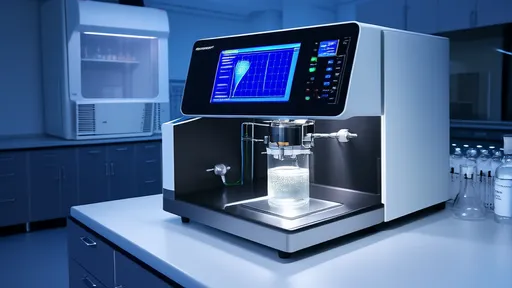
In the world of food science, predicting shelf life is a critical factor for manufacturers and consumers alike. Among various parameters, water activity (aw) has emerged as a key indicator for determining the stability and longevity of dry food products like biscuits. Unlike moisture content, which measures total water present, water activity quantifies the fraction of water available for microbial growth and chemical reactions. This distinction makes it a more reliable metric for shelf-life estimation.
The relationship between water activity and biscuit shelf life is complex but well-documented. When water activity levels remain below 0.6, most microorganisms cannot thrive, significantly extending product stability. However, as biscuits absorb moisture from the environment, their water activity gradually increases, leading to texture changes, flavor degradation, and potential microbial spoilage. Food chemists have developed predictive models that correlate these changes with observable quality parameters to estimate expiration dates accurately.
Modern predictive modeling combines water activity measurements with environmental factors like temperature and humidity. Advanced algorithms can simulate how biscuits behave under different storage conditions, accounting for packaging permeability and seasonal climate variations. These models don't just predict when a product might become unsafe; they forecast the point at which quality deteriorates below consumer acceptance thresholds—often the true determinant of shelf life in commercial products.
One groundbreaking approach involves accelerated shelf-life testing, where products are subjected to elevated temperatures and humidity levels. By measuring the rate of quality decline under stress conditions and comparing it with water activity changes, researchers can extrapolate normal storage behavior. This method, validated against real-time aging studies, has revolutionized product development cycles, allowing manufacturers to bring optimized formulations to market faster.
The packaging industry has responded to these scientific advances with innovative moisture barrier technologies. Modern biscuit wrappers often incorporate multiple layers of specialized materials, each designed to maintain optimal water activity levels throughout distribution and retail display. Some premium products even include intelligent packaging that changes color when internal moisture reaches critical levels, providing visual quality indicators to consumers.
Regulatory bodies worldwide are beginning to recognize water activity-based shelf-life determination as superior to traditional date labeling systems. Several countries have approved alternative expiration date protocols for low-moisture foods that utilize these predictive models. This shift acknowledges that "best before" dates often lead to unnecessary food waste when products remain perfectly safe and palatable beyond arbitrary deadlines.
Looking ahead, the integration of water activity sensors with IoT technology promises to transform quality control. Smart factories could continuously monitor products throughout the supply chain, adjusting environmental controls to maintain ideal conditions. Some visionaries imagine a future where consumer refrigerators communicate with food packaging, automatically adjusting humidity to extend freshness based on real-time water activity readings.
For biscuit manufacturers, these developments present both challenges and opportunities. Reformulating recipes to achieve lower initial water activity without compromising texture requires sophisticated food engineering. However, brands that successfully implement science-based shelf-life extension can gain significant competitive advantages through reduced waste, longer distribution windows, and enhanced consumer trust in product quality.
The marriage of food science and data analytics continues to yield more accurate prediction models. Recent studies incorporate machine learning algorithms trained on vast datasets of product performance under diverse conditions. These next-generation models account for subtle interactions between ingredients, processing methods, and storage environments that earlier approaches couldn't capture.
As research progresses, the food industry moves closer to its ultimate goal: perfectly predicting and controlling product quality from factory to consumer. Water activity measurement stands at the heart of this quest, proving that sometimes the smallest molecules—water—hold the key to solving some of food technology's biggest challenges.

By /Jul 24, 2025

By /Jul 24, 2025

By /Jul 24, 2025
By /Jul 24, 2025

By /Jul 24, 2025
By /Jul 24, 2025

By /Jul 24, 2025

By /Jul 24, 2025
By /Jul 24, 2025

By /Jul 24, 2025

By /Jul 24, 2025

By /Jul 24, 2025
By /Jul 24, 2025
By /Jul 24, 2025
By /Jul 24, 2025
By /Jul 24, 2025
By /Jul 24, 2025

By /Jul 24, 2025
By /Jul 24, 2025

By /Jul 24, 2025
