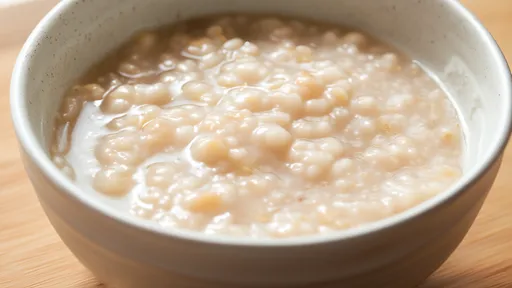
The relationship between rice-to-water ratios and porridge viscosity is a fascinating interplay of chemistry, tradition, and culinary science. At the heart of this phenomenon lies starch gelatinization—a process that transforms humble grains into comforting bowls of porridge with textures ranging from silky to pudding-like. Across cultures, the simple act of boiling rice in water yields dramatically different results depending on proportions, stirring techniques, and cooking durations.
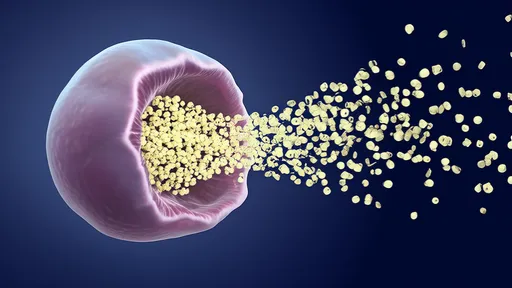
When dry rice meets hot water, the granules begin absorbing moisture like microscopic sponges. This hydration causes irreversible swelling of starch molecules—primarily amylose and amylopectin—that make up about 90% of rice's dry weight. The critical temperature threshold for gelatinization in most rice varieties falls between 60-80°C, when hydrogen bonds maintaining starch's crystalline structure break down. As more water penetrates the granules, they swell to several times their original size, leaching amylose into the surrounding liquid.
The viscosity of porridge directly correlates with this starch liberation. Traditional Cantonese congee masters understand this implicitly—their 1:15 rice-to-water ratio produces an almost drinkable texture after hours of simmering, while Japanese okayu at 1:5 yields a spoon-standing consistency. The amylose molecules, being linear, tend to flow more freely than their branched amylopectin counterparts. This explains why short-grain rice varieties with higher amylopectin content naturally create creamier textures, even before considering mechanical breakdown from stirring.
Water acts as both medium and moderator in this transformation. Insufficient water leads to incomplete gelatinization, resulting in gritty textures as some starch granules remain intact. Conversely, excessive water dilutes the starch network, preventing the development of satisfying mouthfeel. Professional kitchens often use the "line test"—drawing a finger across the back of a spoon—to assess viscosity development during cooking. The speed at which the line disappears indicates the starch's thickening power at that particular hydration stage.
Temperature control proves equally crucial as the water ratio. Rapid boiling causes violent starch granule rupture, releasing all contents at once and potentially creating uneven textures. Many traditional methods employ an initial soak (30 minutes to overnight) to allow gradual water penetration, followed by gentle simmering. This controlled gelatinization allows for more orderly starch network formation, contributing to what Japanese chefs call "neba-neba"—the desirable sticky-smooth quality in premium okayu.
The rice's milling degree introduces another variable. Brown rice, with its intact bran layer, requires more water and longer cooking as the fibrous coating impedes water absorption. Paradoxically, some ultra-polished white rice varieties gelatinize too rapidly, requiring careful heat modulation to prevent clumping. Ancient rice preparation techniques like washing and rubbing grains between palms weren't merely about cleanliness—they removed surface starch that could cause uneven gelatinization.
Stirring technique dramatically impacts final viscosity. Constant agitation in the first 10 minutes of cooking encourages starch release, creating the foundation for creaminess. However, excessive stirring later in the process can break down the starch network already formed, leading to thinner consistency. Many traditional recipes specify resting periods where the pot sits covered off-heat, allowing the amylose-amylopectin matrix to set properly.
Modernist cuisine has brought scientific precision to this ancient food. Rheology studies reveal that optimal mouthfeel occurs at 3,000-5,000 centipoise—achievable through specific rice-to-water ratios when accounting for varietal differences. Interestingly, the same starch gelatinization principles apply whether making Italian risotto, Indian khichdi, or Filipino lugaw, though cultural preferences dictate vastly different ideal viscosities. The universal truth remains: mastering water proportions unlocks the alchemy that turns grain and water into comfort.
Beyond the pot, starch retrogradation—the recrystallization of gelatinized starch upon cooling—explains why leftover porridge thickens dramatically. Reheating never fully restores the original texture, as the realigned starch molecules require fresh water to re-gelatinize properly. This scientific insight validates the wisdom of grandmothers worldwide who add a splash of water when rewarming yesterday's porridge.
The cultural weight carried by these simple ratios speaks volumes. In Chinese medicinal traditions, 1:20 "rice tea" serves as digestive aid, while 1:8 "spoon porridge" nourishes convalescents. Korean seollungtang masters adjust ratios based on the collagen content from their bone broth base, demonstrating how starch interacts with other thickeners. What appears as basic subsistence food reveals astonishing complexity under scrutiny—a testament to how humanity has optimized nourishment through generations of empirical kitchen science.
By /Jul 24, 2025
By /Jul 24, 2025
By /Jul 24, 2025
By /Jul 24, 2025
By /Jul 24, 2025

By /Jul 24, 2025
By /Jul 24, 2025
By /Jul 24, 2025
By /Jul 24, 2025
By /Jul 24, 2025
By /Jul 24, 2025
By /Jul 24, 2025
By /Jul 24, 2025
By /Jul 24, 2025
By /Jul 24, 2025
By /Jul 24, 2025
By /Jul 24, 2025
By /Jul 24, 2025
By /Jul 24, 2025

By /Jul 24, 2025
