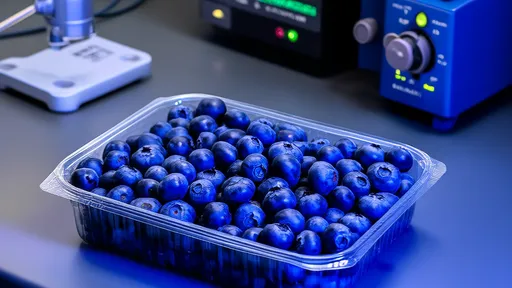
The preservation of fresh produce has long been a challenge for the food industry, particularly when it comes to delicate fruits like blueberries. Among the various methods employed, modified atmosphere packaging (MAP) has emerged as a promising solution to extend shelf life while maintaining quality. One critical aspect of MAP is respiratory inhibition—slowing down the fruit's metabolic activity to delay ripening and decay. Blueberries, with their high respiration rate, are particularly sensitive to atmospheric conditions, making the optimization of gas composition a key factor in successful preservation.
Understanding Respiratory Inhibition in Blueberries
Respiration is a natural process in fruits, involving the breakdown of sugars and the release of carbon dioxide, water, and heat. For blueberries, a high respiration rate accelerates spoilage, leading to softening, mold growth, and loss of flavor. Modified atmosphere packaging works by altering the surrounding gas composition—typically reducing oxygen (O₂) and increasing carbon dioxide (CO₂)—to suppress respiration. This controlled environment slows metabolic activity without completely halting it, thereby extending the fruit's postharvest life.
The challenge lies in finding the right balance. Too little oxygen can lead to anaerobic respiration, causing off-flavors and ethanol buildup, while excessive carbon dioxide may result in tissue damage. Research suggests that for blueberries, an optimal range of 5-10% O₂ and 15-20% CO₂ effectively inhibits respiration without compromising quality. However, these values can vary depending on factors such as cultivar, ripeness at harvest, and storage temperature.
The Role of Gas Permeability in Packaging Materials
Selecting the right packaging material is just as crucial as determining the gas composition. Films used in MAP must allow for controlled gas exchange to maintain the desired atmosphere. Polyethylene and polypropylene are commonly used due to their moderate permeability, but newer materials with tailored gas transmission rates are being explored. For blueberries, a film with high CO₂ permeability is often preferred to prevent gas buildup that could damage the fruit.
Another consideration is the film's water vapor transmission rate. Blueberries are prone to moisture loss, which leads to shriveling. A packaging material that minimizes water loss while permitting adequate gas exchange is ideal. Some advanced films incorporate micro-perforations or nanocomposites to achieve this balance, though these technologies come with higher costs and production complexities.
Temperature's Influence on MAP Efficacy
While MAP parameters are critical, storage temperature plays an equally important role in respiratory inhibition. Blueberries are typically stored at 0-5°C to reduce metabolic activity. However, temperature fluctuations can disrupt the carefully balanced atmosphere inside the package. For instance, a rise in temperature increases respiration rates, leading to faster O₂ depletion and CO₂ accumulation—potentially pushing the fruit into anaerobic conditions.
Some studies suggest dynamic MAP systems that adjust gas composition in response to temperature changes. These intelligent packaging solutions, though still in development, could revolutionize blueberry preservation by ensuring optimal conditions throughout the supply chain. Until then, maintaining a consistent cold chain remains the most practical approach to supporting MAP effectiveness.
Challenges in Commercial Implementation
Despite the proven benefits of MAP for blueberries, widespread adoption faces hurdles. One major issue is the variability in fruit response. Different blueberry cultivars exhibit distinct respiratory patterns, making it difficult to establish universal packaging parameters. Small-scale producers, in particular, may lack the resources to fine-tune MAP for their specific products.
Another challenge is cost. Modified atmosphere packaging requires specialized equipment for gas flushing and sealing, adding to production expenses. While larger operations can absorb these costs, smaller growers may find the investment prohibitive. Additionally, consumer preferences for sustainable packaging complicate the picture, as many MAP materials are not easily recyclable.
Future Directions in Blueberry MAP
Innovations in packaging technology continue to push the boundaries of what's possible in respiratory inhibition. Active packaging systems, which incorporate oxygen scavengers or CO₂ emitters, offer more precise atmospheric control than passive MAP. Edible coatings, often derived from natural polymers like chitosan, provide an additional barrier to gas exchange while being environmentally friendly.
Research is also exploring the use of predictive modeling to optimize MAP parameters. By analyzing data on respiration rates, temperature sensitivity, and quality degradation, scientists aim to develop customized packaging solutions for different blueberry varieties and supply chain conditions. As these technologies mature, they could make MAP more accessible and effective for producers of all sizes.
The intersection of respiratory science and packaging engineering holds great promise for the future of blueberry preservation. By continuing to refine gas compositions, materials, and storage protocols, the industry can reduce waste and deliver fresher, longer-lasting berries to consumers worldwide.
By /Jul 24, 2025
By /Jul 24, 2025

By /Jul 24, 2025
By /Jul 24, 2025

By /Jul 24, 2025
By /Jul 24, 2025
By /Jul 24, 2025
By /Jul 24, 2025
By /Jul 24, 2025
By /Jul 24, 2025
By /Jul 24, 2025
By /Jul 24, 2025
By /Jul 24, 2025
By /Jul 24, 2025
By /Jul 24, 2025
By /Jul 24, 2025
By /Jul 24, 2025
By /Jul 24, 2025
By /Jul 24, 2025

By /Jul 24, 2025
